When you hire a drone pilot, the reel is the interview — and the thing to watch isn’t how high the drone goes. It’s how the camera moves. A good pilot’s footage has intent behind every move: a slow reveal that lets a building arrive, an orbit that holds a subject dead center, a chase that stays glued to a car at speed, a one-take that threads a rooftop terrace without a cut. Anyone can buy a drone and get it in the air. The difference between a hobbyist and a professional is what the camera does once it’s up there.
What creative camera movement actually looks like
Start with the reel. Watch for variety and purpose. A strong reel doesn’t show the same slow push-in ten times — it shows a pilot choosing the right move for the subject.
A chase shot should feel like it’s part of the action, not watching from a distance. When we filmed Subaru’s new models at Summit Point, the FPV chase stayed tight on a blue BRZ tS and a red WRX around a wet circuit, passes coordinated with the drivers in advance so the camera could run at speed and still be safe. The point of that shoot was showcasing the cars for Subaru’s internal sales team — so the movement had to sell the cars, not just look fast.
A reveal should earn its moment. A rooftop, a waterfront, a shipyard — the camera starts close and the subject arrives instead of just appearing. Our aerials over the Hudson River waterfront and a Manhattan rooftop terrace run on that idea: one continuous FPV one-take through the space, no cuts, so the viewer feels the place instead of being shown a slideshow of it.
And sometimes the creative problem isn’t speed or height at all — it’s access. At Madison Square Garden, the problem was reaching fans on the top levels, where wired cameras couldn’t go. The answer was a live broadcast aerial orb, light and safe enough to operate over people, piloted live during Knicks and Rangers games. That’s creativity as problem-solving: the shot nobody else could get, because the tool didn’t exist until we flew it. More on that kind of work on our live broadcast page.
The shot should serve the job, not the pilot
Here’s the test we apply to our own work: does the movement serve what the client needs, or does it just show off the drone?
A film crew needs something different from a developer. On The Pale Blue Eye, the job was 3-D mapping Storm King Mountain with a Mavic 3 so the visual effects team could rebuild the mountain and put it in the film. The flying was methodical, not showy — because the footage had to be precise enough to build a world from. A construction client needs something else again: dated, consistent progress photos that prove what’s actually built, which is why we wrote about what drone progress photos prove to a lender. Same aircraft, completely different camera language.
When you’re hiring, ask the pilot what the shots in their reel were for. If every answer is “it looked cool,” you’re talking to someone who flies for themself. If the answer is “the client needed the audience to feel this” — that’s a pilot who thinks like a filmmaker.
Two people, one shot
There’s a practical detail behind most of the best drone work: two operators. One person flies the aircraft; the other operates the camera. That split is how a camera can move independently of the flight path — panning, tilting, and framing while the drone itself is doing something else entirely.
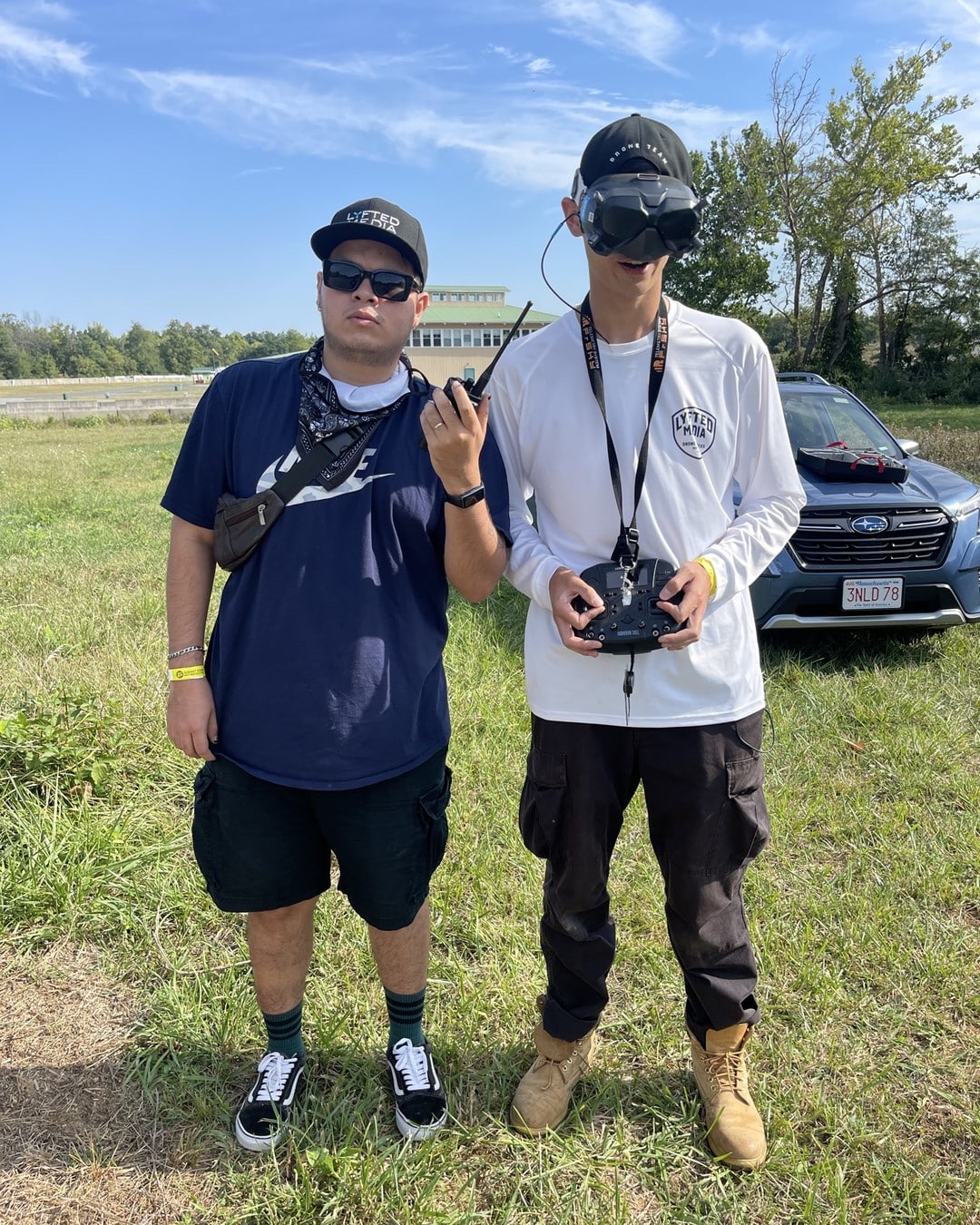
That’s how we work. Jimmy flies; Francesco Cordaro operates the camera. It’s the same dual-operator setup behind our aerial cinematography and film work, and it’s what makes the difference between a drone that points a camera and a camera that happens to fly. When you’re comparing pilots, ask who operates the camera — and whether the person flying is also the person framing. If it’s one person doing both, the shots will show it.
The paperwork still has to be there
None of this replaces the basics — it just isn’t the story. Before you book anyone, confirm the three things that have to be in place: Part 107 certification, insurance with a certificate for your job, and the waivers or permits your shoot needs. In New York City that means an NYPD permit on top of Part 107. On a shipyard it means TWIC and MARMC access — the same access behind our shipyard drone services. In controlled airspace it means authorization in advance. We handle all of it before shoot day. Check it once, then get back to the creative.
How to hire a drone pilot
Watch the reel for movement with intent. Ask what each shot was for. Ask who operates the camera. Then confirm the paperwork and book the pilot whose work looks like your job.
See how we fly in our case studies — the River Port shipyard, the MSG blimp-cam, the Subaru FPV chase, and the Pale Blue Eye mapping — and the range of it on our nationwide page. We fly from Virginia Beach and New York City, available nationwide, with clients covering travel.
Frequently asked questions
How do I judge a drone pilot’s reel?
Watch the camera movement, not the altitude. Look for variety — reveals, orbits, chases, tracking shots — and ask what each shot was for. A strong reel shows movement that serves the subject, not the same push-in repeated.
What is dual-operator flying, and why does it matter?
One person flies the aircraft while a second person operates the camera. The camera can pan, tilt, and frame independently of the flight path, which is how cinema-style shots happen. A single operator flying and framing at once can’t do the same work.
Do I still need to check Part 107 and insurance?
Yes — they’re the floor, not the whole job. Confirm Part 107 certification, insurance with a certificate for your project, and any permits or waivers your shoot needs (NYPD in New York City, TWIC and MARMC on shipyards, airspace authorization near airports). Then judge the pilot on the creative work.